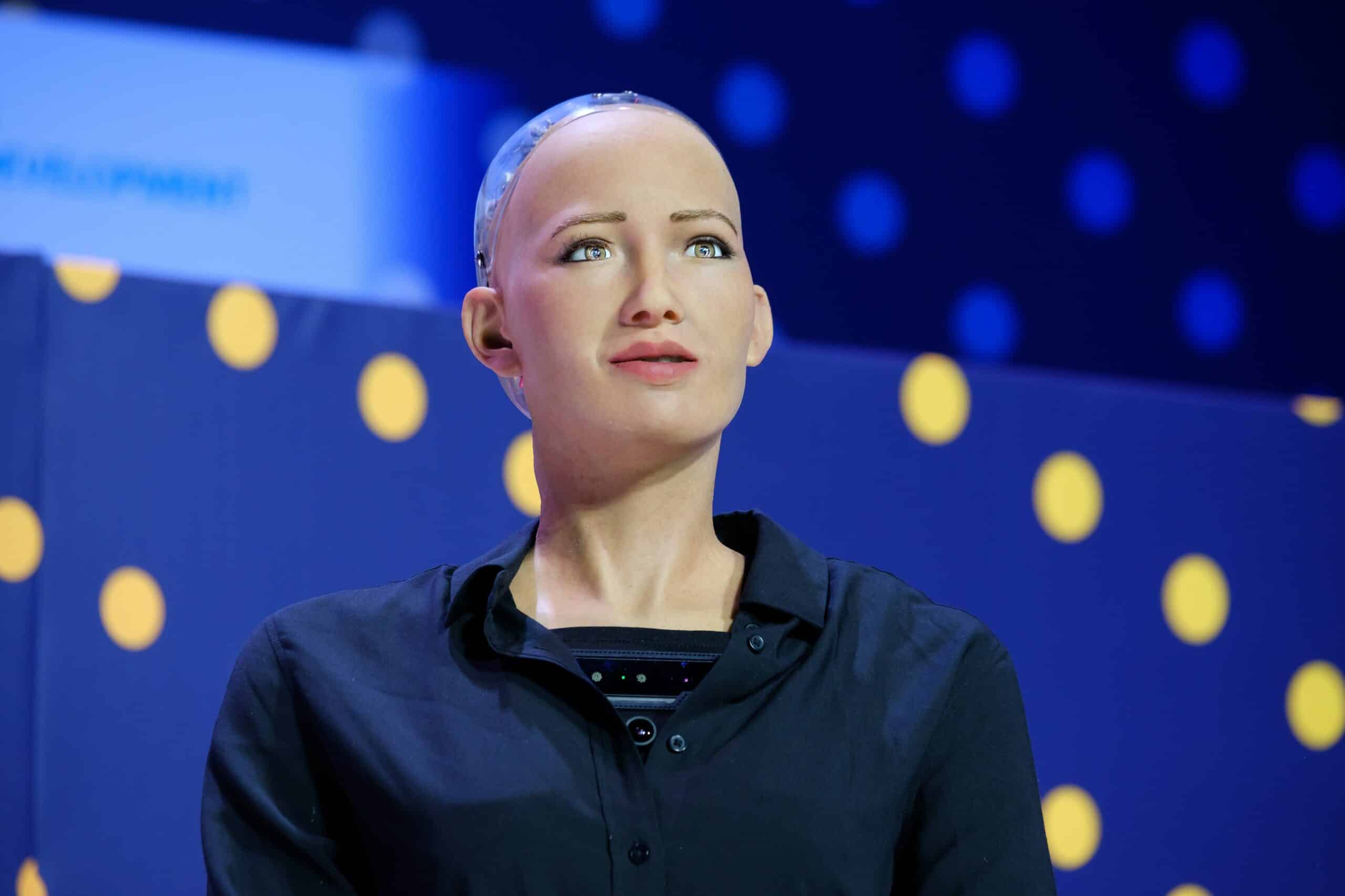
Sophia AI: The Humanoid Robot Shaping the Future of Artificial Intelligence
What if robots could smile, maintain eye contact, and hold real conversations?
The world witnessed this possibility through Sophia AI, one of the most advanced humanoid robots ever created.
In this blog, you will learn what Sophia AI is, how she works, her real-world applications, benefits, challenges, and what the future of humanoid robotics looks like.
What is Sophia AI?
Sophia is a social humanoid robot developed by Hanson Robotics, a Hong Kong-based robotics company.
She is designed to interact with humans using:
- Natural language processing
- Facial recognition
- Emotional expression simulation
- Machine learning algorithms
Sophia gained global attention after becoming the first robot to receive citizenship, demonstrating how AI and robotics are merging into society.
Where Does Sophia Fit in AI?
- Narrow AI (Weak AI): Sophia operates within specific programmed tasks like conversation and recognition.
- General AI: A future AI that could perform any intellectual task like humans (still theoretical).
- Super AI: Hypothetical intelligence beyond human capability.
Sophia is currently an advanced example of Narrow AI integrated with robotics.
How Sophia AI Works (Simple Explanation)
Step 1: Data Processing
Sophia uses AI models trained on large datasets of human conversations, facial expressions, and speech patterns.
Step 2: Natural Language Understanding
She analyzes spoken input and generates context-aware responses.
Step 3: Facial Expression System
Input: Human Speech
↓
AI Processing (Language + Emotion Analysis)
↓
Output: Verbal Response + Facial Expression
Her facial movements are controlled by motors under synthetic skin, allowing realistic emotional reactions.
Real-World Applications of Sophia AI
- Technology conferences and exhibitions
- Research in human-robot interaction
- Customer service experiments
- Educational demonstrations
- Public AI awareness campaigns
In developing countries like Pakistan, humanoid robotics can inspire students and promote STEM education.
Benefits of Sophia AI
- Advances human-robot interaction research
- Promotes AI awareness globally
- Encourages robotics innovation
- Enhances education and public engagement
Challenges & Risks
- Ethical concerns about AI rights
- Privacy issues in facial recognition
- High development costs
- Fear of job automation
- Security vulnerabilities
As humanoid robots become more advanced, ethical frameworks must evolve alongside the technology.
Practical Example: Simple AI Chatbot Logic
Below is a simplified conceptual example of how conversational AI might work:
user_input = "Hello Sophia"
response = process_language(user_input)
display(response)
While Sophia’s system is far more advanced, the core principle remains: input → processing → intelligent output.
The Future of Humanoid AI (2026 and Beyond)
- More realistic emotional intelligence
- AI integration with robotics industries
- Humanoid assistants in hospitals and banks
- AI + Robotics startups growth
- Advanced social robots in daily life
The boundary between humans and machines will continue to blur as robotics and AI technologies evolve.
Conclusion
Sophia AI represents a powerful combination of artificial intelligence and robotics. She is not just a machine — she is a symbol of how far AI has progressed in social interaction.
The future of humanoid robots depends on innovation, ethical responsibility, and global collaboration.
What’s Next?
✔ Follow for more AI and robotics insights
✔ Explore beginner AI development projects
✔ Start learning Machine Learning and Robotics today
✔ Contact for AI-based solutions
Frequently Asked Questions (FAQs)
Q1: Is Sophia fully autonomous?
No, she combines AI automation with human supervision.
Q2: Can Sophia think like a human?
No, she operates within programmed AI models and does not possess human consciousness.
Q3: Will humanoid robots replace humans?
They are designed to assist, not completely replace human roles.