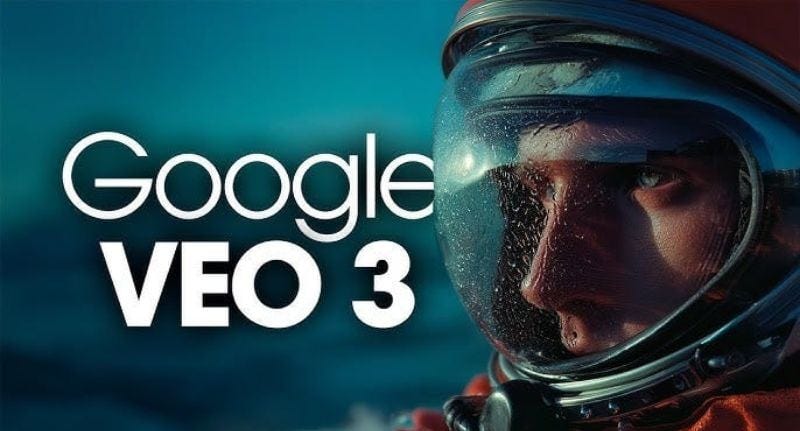
Google Veo 3: The Future of AI Video Generation
Imagine creating a cinematic-quality video just by typing a sentence. No cameras. No actors. No editing software.
This is no longer science fiction. AI-powered video generation is transforming digital content creation, and Google Veo 3 is leading this revolution.
In this blog, you’ll learn what Google Veo 3 is, how it works, its real-world applications, benefits, risks, and what the future holds for AI-generated video.
What is Google Veo 3?
Google Veo 3 is an advanced AI text-to-video model developed by Google DeepMind. It can generate realistic, high-quality videos from simple text prompts.
Unlike traditional video editing tools, Veo 3 understands:
- Scene composition
- Camera movement
- Lighting and cinematic styles
- Object motion consistency
It represents the next step in Generative AI, similar to how AI models generate images or text — but now with full motion video.
Where Does Veo 3 Fit in AI?
- Narrow AI (Weak AI): Veo 3 falls into this category. It performs one specific task — video generation — extremely well.
- General AI: Still theoretical. Would perform any intellectual task like a human.
- Super AI: Hypothetical future intelligence beyond human capability.
Veo 3 is currently one of the most advanced examples of Narrow AI in media creation.
How Google Veo 3 Works (Simple Explanation)
Step 1: Data Collection
The model is trained on large-scale video and image datasets to understand motion, physics, lighting, and storytelling patterns.
Step 2: Training Neural Networks
Deep learning models analyze billions of frames to learn how scenes evolve over time.
Step 3: Prompt Processing
Input: "A futuristic city at sunset with flying cars"
↓
AI Processing (Scene + Motion + Lighting)
↓
Output: Cinematic AI-generated video
The system predicts each video frame while maintaining visual consistency and realistic movement.
Real-World Applications of Veo 3
- Film pre-visualization
- Marketing & advertising videos
- YouTube and social media content
- Game environment prototyping
- Educational simulations
In emerging tech markets like Pakistan, AI video tools can help startups reduce production costs and compete globally.
Benefits of Google Veo 3
- Massive reduction in production costs
- Faster content creation
- Creative freedom without technical barriers
- 24/7 AI-powered generation
- High cinematic quality
Challenges & Risks
- Deepfake misuse concerns
- Copyright and ownership issues
- Job displacement in traditional video production
- Ethical and regulatory concerns
As AI video improves, responsible usage and policy development become critical.
Practical Example: Prompt-Based Video Creation
Below is a conceptual example of how a developer might interact with a video model:
prompt = "A cinematic drone shot of mountains at sunrise"
video = generate_video(prompt)
video.render()
The AI converts text instructions into structured motion sequences, camera angles, lighting effects, and environmental dynamics.
The Future of AI Video (2026 and Beyond)
- Longer and more complex videos
- Interactive AI video agents
- AI + Robotics integration
- AI-generated movies
- Personalized dynamic advertisements
The line between human-created and AI-generated media will continue to blur.
Conclusion
Google Veo 3 represents a major leap in AI-driven creativity. It combines deep learning, neural networks, and cinematic intelligence to redefine how videos are produced.
The future of storytelling is shifting from cameras to prompts — and those who adapt early will lead the next digital revolution.
What’s Next?
✔ Follow for more AI tutorials and tech insights
✔ Explore AI development projects
✔ Start learning Machine Learning today
✔ Contact for AI-powered solutions
Frequently Asked Questions (FAQs)
Q1: Is Google Veo 3 available to the public?
Currently, access may be limited as Google continues development and testing.
Q2: Can Veo 3 replace video editors?
It can assist and automate many tasks, but human creativity still plays a vital role.
Q3: Is AI video generation safe?
It depends on ethical usage and proper regulation.